
Seoul Central Mosque
Itaewon (Hannam-dong)
South Korea's first and largest mosque, opened 1976, and the religious heart of Muslim life in Seoul.
Loading…
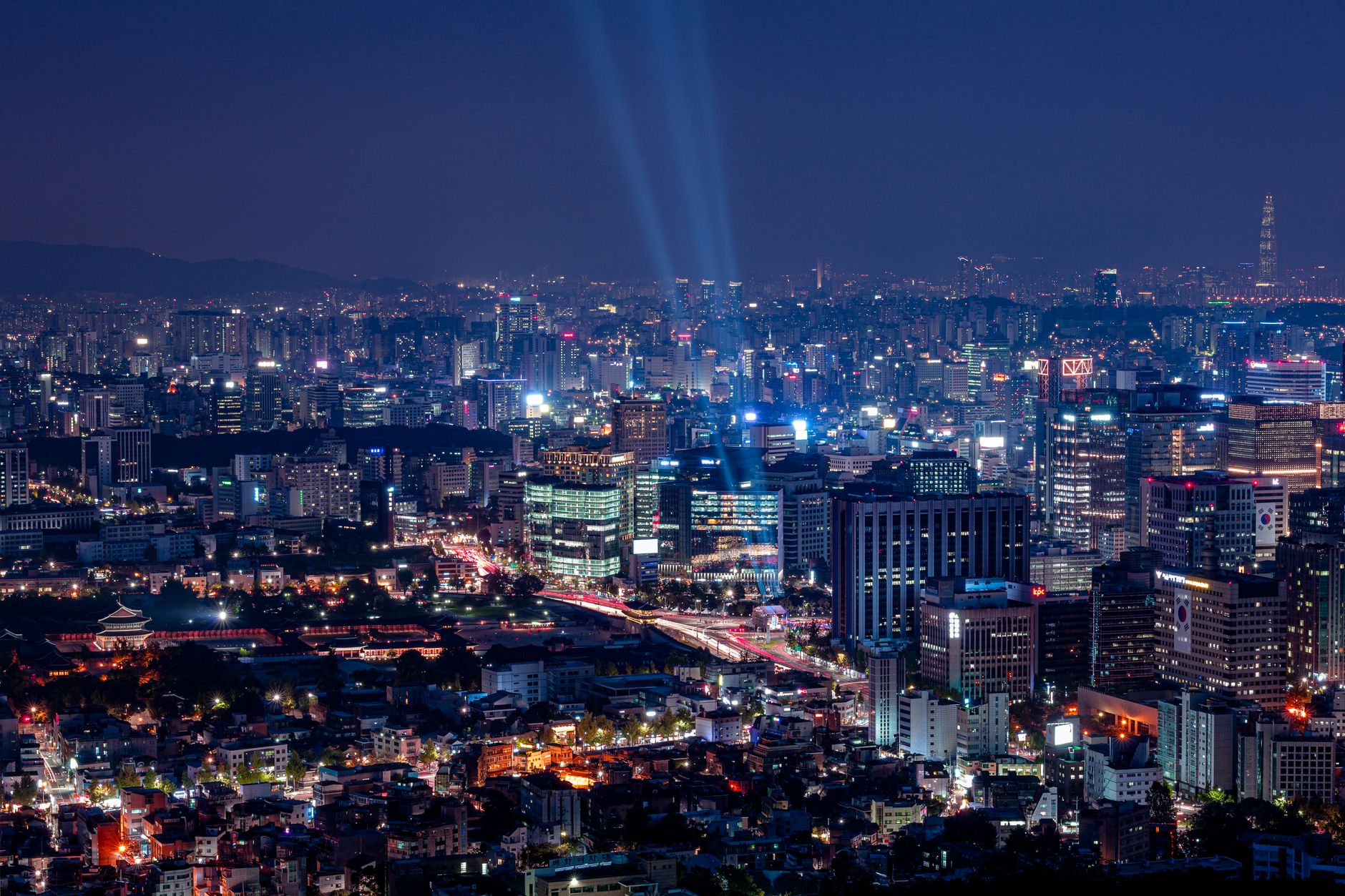
Seoul, South Korea
Seoul, the capital of South Korea, is a fast, ultra-modern city that hosts major food and halal-focused trade shows — events such as Seoul Food & Hotel and Korea's halal food and cosmetics expos draw international buyers to venues like the COEX Convention & Exhibition Center in Gangnam. Korea is not a Muslim-majority country, so halal food is not the default: it is concentrated around the Seoul Central Mosque in Itaewon (and the 'Muslim street', Usadan-ro, beside it), with a growing number of certified and Muslim-friendly restaurants elsewhere that the Korea Tourism Organization formally classifies. Outside those, pork and non-halal meat are common in Korean cooking, so it pays to plan meals. The upside: the subway is world-class, cheap and signed in English, the city is extremely safe, and a 24-hour multilingual tourist hotline (1330) is a phone call away.
Mosques and sights
Mosques and Islamic-heritage landmarks worth your time around the expo.
Itaewon (Hannam-dong)
South Korea's first and largest mosque, opened 1976, and the religious heart of Muslim life in Seoul.

Itaewon
The hilly lane up to the mosque lined with halal restaurants, grocers and Islamic bookshops.

Itaewon
Cluster of shops below the mosque selling halal meat, spices and prayer supplies for Muslim visitors.

Mount Namsan
Iconic city viewpoint overlooking Itaewon, easily paired with a visit to the nearby mosque and halal dining.

Jongno
Seoul's grand royal palace, a major heritage sight within reach of Itaewon's halal dining.
Halal food
Well-loved halal restaurants across Seoul, from cheap local favourites to special-occasion dining.

Itaewon
KMF-certified Korean kitchen serving halal bulgogi, bibimbap and samgyetang minutes from the mosque.

Itaewon
Affordable halal spot offering Korean dishes alongside Malaysian favourites.

Itaewon
Classic halal curry house on the mosque street known for biryani and grilled meats.

Itaewon
Long-running Turkish restaurant serving halal kebabs, pide and baklava.

Itaewon
Popular halal Middle Eastern eatery with shawarma, hummus and mezze near the mosque.
Hotels
Picks for every budget.

Hannam-dong (Namsan)
Five-star hotel on Namsan slopes a short distance from Itaewon's halal district.

Jangchung-dong (Namsan)
Upscale resort-style hotel with relax pools on the eastern edge of Mount Namsan.

Itaewon
Well-known midrange hotel beside Itaewon station and the halal restaurant streets.

Itaewon
Stylish boutique hotel in the heart of Itaewon close to the mosque and dining.

Itaewon
Budget hostel a short walk from Itaewon station with dorm and private rooms.

Itaewon
Inexpensive guesthouse steps from Itaewon's halal eateries and the mosque.
Know before you go
Everything a Muslim traveller needs to land in Seoul with confidence.
Getting in
Incheon International Airport (ICN)
• AREX airport railroad, ~43 min (Express) to Seoul Station; ~60 min all-stop
• Airport limousine bus, 60-90 min depending on traffic and district
• Taxi / Kakao T, 60-80 min
Gimpo International Airport (GMP)
• Subway (lines 5 & 9) / AREX, 30-50 min to the centre
Getting around
Seoul's subway is one of the best in the world — vast, frequent, punctual, cheap and fully signed in English (with numbered lines and exits). It reaches almost everywhere a visitor needs, including COEX (line 2, Samseong) and Itaewon (line 6) for halal food and the mosque. Buses fill the gaps and taxis are reasonably priced; the AREX railroad links Incheon airport into the same network.
Taxis are plentiful, metered and reasonably priced; the Kakao T app is the standard way to hail one and removes any language barrier. Orange/silver taxis are regular; black taxis are premium. Few drivers speak English, so show your destination in Korean (the app or a screenshot) or use the 1330 hotline's interpretation help.
Visa & entry
Money
South Korean Won · KRW
Korea is highly cashless — cards and contactless (including mobile pay) are accepted almost everywhere, including taxis and convenience stores. Carry a little cash for traditional markets and small stalls.
Tipping is not customary or expected in South Korea — prices are as listed, and leaving extra can cause confusion. Good service is standard.
Connectivity
KT, SKT and LG U+ tourist SIMs and rentable pocket-WiFi at Incheon and Gimpo arrivals; Korea has some of the world's fastest mobile and public Wi-Fi
Plug: Type C / F (two round pins, European-style) · 220V / 60Hz
Emergency
General: 112 (police) / 119 (fire & ambulance); 1330 = 24h multilingual tourist hotline
Fire: 119
Safety
Where to pray
Seoul Central Mosque: Korea's first and main mosque, opened in 1976 on a hill above Itaewon — the centre of Muslim life in Seoul, with a large Friday congregation and the halal food quarter at its foot.
Airport & venue prayer rooms: Incheon International Airport has dedicated prayer rooms in both terminals, and a growing number of malls, hotels and convention facilities provide musalla; outside these, prayer space is limited, so plan ahead.
Getting here
Most halal-expo buyers and exhibitors fly in from the world's main halal hubs. Here's how to reach Seoul from each. Entry rules vary by nationality, so check the Visa & entry note.
Quick answers
Top halal picks in Seoul: EID Halal Korean Food (Itaewon), Makan Halal Korean Restaurant (Itaewon), Salam Restaurant (Itaewon), Kervan (Itaewon) and Petra Restaurant (Itaewon).
Luxury: Grand Hyatt Seoul and Banyan Tree Club & Spa Seoul. Mid-range: Hamilton Hotel Itaewon and Imperial Palace Boutique Hotel. Budget: H Hostel Itaewon and Cube Guesthouse Itaewon.
Seoul Central Mosque, Usadan-ro 10-gil (Halal Street), Itaewon halal grocery shops, Namsan Seoul Tower and Gyeongbokgung Palace.
Seoul Central Mosque and Airport & venue prayer rooms.
Incheon International Airport (ICN) and Gimpo International Airport (GMP).
Entry rules depend on nationality. South Korea has extended its K-ETA exemption for citizens of 67 visa-waiver countries (including the US, Canada, UK, Australia, New Zealand, Singapore, Japan and most EU states) through 31 December 2026 — those travellers may enter without applying for a K-ETA. If you enter without a K-ETA you must instead complete the mandatory digital e-Arrival Card before arrival (it replaced the old paper arrival card for most arrivals from 1 January 2026); holding a valid K-ETA exempts you from the e-Arrival Card. Travellers not covered by the visa-waiver exemption should apply for a K-ETA online before flying, or obtain a visa. Confirm your status on the official K-ETA portal before you travel.
Sources: https://www.k-eta.go.kr/portal/apply/index.do · https://english.visitkorea.or.kr · https://www.airport.kr/ap/en/index.do · https://english.seoul.go.kr